Landscape design in Varna: what it is and who it is for
Landscape design in Varna means planning and building the whole outdoor space around a house: levels and slopes, paths and terraces, lawns, trees and shrubs, irrigation and lighting. The aim is a garden that complements the architecture, is comfortable to use all year and does not demand constant, expensive upkeep. At Altea Build we design and lay out yards, gardens and green areas so that they suit the building and the climate of the Black Sea coast.
The service is for owners of new houses in and around Varna (Briz, Galata, Vinitsa, Evksinograd, St. Constantine and Helena, Priboi), for people buying a house off-plan who want the garden finished together with it, and for owners of an old or neglected plot that needs a new structure. It is particularly useful for owners of a holiday home on the coast who are often abroad and want a garden that looks good with little upkeep. We work in Varna and the surrounding region and, where needed, in Veliko Tarnovo and elsewhere in Bulgaria.
A project can be small, for example an entrance path, a few planting beds and irrigation, or cover the whole plot. We therefore do not sell a fixed package: the scope is set after a site visit, according to the plot, your wishes and your budget.
What a garden design project can include
No garden needs everything listed below. These are the elements a landscaping project typically contains and that we can include in yours, depending on the case.
Site survey and garden design
We start with a visit to the plot: its shape and slope, orientation to the sun and the wind, soil, existing trees, routes of utilities, entrances and parking. On an up-to-date survey we prepare the garden design: a plan of the zones (entrance, seating terrace, lawn, planting beds, play area), a paving plan and a planting plan. If the house is still being designed, the garden is drawn on the same levels as the building.
Grading and drainage
This is the invisible part that everything else depends on. Grading sets the levels of the terraces, paths and lawn and the direction in which water flows. The ground is usually shaped with a gentle fall away from the house, and on clay soils that hold water we plan drains, channels or soakaways. Rainwater is directed according to local requirements, away from the foundations and away from the neighbouring plot.
Paths, paving, terraces and retaining walls
Hard landscaping is the heaviest part of the budget and the hardest to repair later, so it is built on a proper base: compacted crushed stone, a suitable fall for run-off and, where needed, geotextile. Typical choices are concrete pavers, natural stone, porcelain stoneware for terraces and timber or composite decking. Varna has humidity and days below freezing, so materials should be frost-resistant and slip-resistant.
On sloping plots, retaining walls create flat, usable areas. They can be built from reinforced concrete with a facing, from stone or from gabions. Taller walls are designed by a structural engineer rather than improvised on site, and some of them, as well as fences and other structures in the garden, may need a permit or approval. We check this at the start.
Lawns, trees, shrubs and perennials
The main choice is between a natural lawn and artificial turf. A natural lawn (seeded or laid as turf rolls) looks and feels best but needs regular watering and mowing in Varna in July and August. Artificial turf needs no watering but gets very hot in the sun and also needs a solid base. The best result is often a mix: lawn only where it is actually used, and everywhere else beds of tough plants, mulch or gravel.
Irrigation
Automatic irrigation saves water and time. Drip lines suit beds, trees and hedges, while rotor or spray heads suit the lawn. The system is divided into zones, runs early in the morning or in the evening and can pause when it rains. The pipes go in before the paving and the lawn, so irrigation has to be in the plan from the beginning. You also need a water source: the mains with a separate meter or your own borehole, and drawing water from a borehole or well may require a permit or registration under the Water Act.
Outdoor lighting
Lighting can include low bollards along paths, spotlights for trees and walls and lights for steps and terraces. Cables are laid in protective ducts before the paving. Near the sea we choose fittings with a high water-protection rating (at least IP65) and corrosion-resistant materials such as aluminium or stainless steel. Power and controls belong to the house's electrical system, so they are coordinated with the plumbing, electrical and HVAC design.
A Black Sea garden: climate, wind and the right plants
A garden in Varna has its own conditions. Summers are hot and dry, with long spells without rain in July and August. Winters are milder than inland but bring frosts and a cold north-easterly wind. In more exposed coastal areas the wind carries salt spray that scorches the leaves of sensitive plants. Many plots have clay soil, which holds water in spring and cracks in summer, and some are on a slope.
Drought-tolerant planting for a garden in Varna
A water-wise garden is built on plants that are used to dry summers and wind. Well-known and reliable choices on the Black Sea coast include lavender, rosemary, sage, thyme, Russian sage (Perovskia), ornamental grasses, sedums, junipers and tamarisk. Among trees and fruiting shrubs, fig and pomegranate do well. Warmth-loving plants such as oleander and bay laurel also grow in Varna, but in open, cold spots they can be damaged by frost, so they go in sheltered places. The exact selection depends on the plot, how exposed it is to wind and the soil.
Beyond plant choice, water is saved by mulching, grouping plants by their water needs, drip irrigation and limiting the lawn. These decisions are made in the design, not added at the end.
A low-maintenance garden for a holiday home
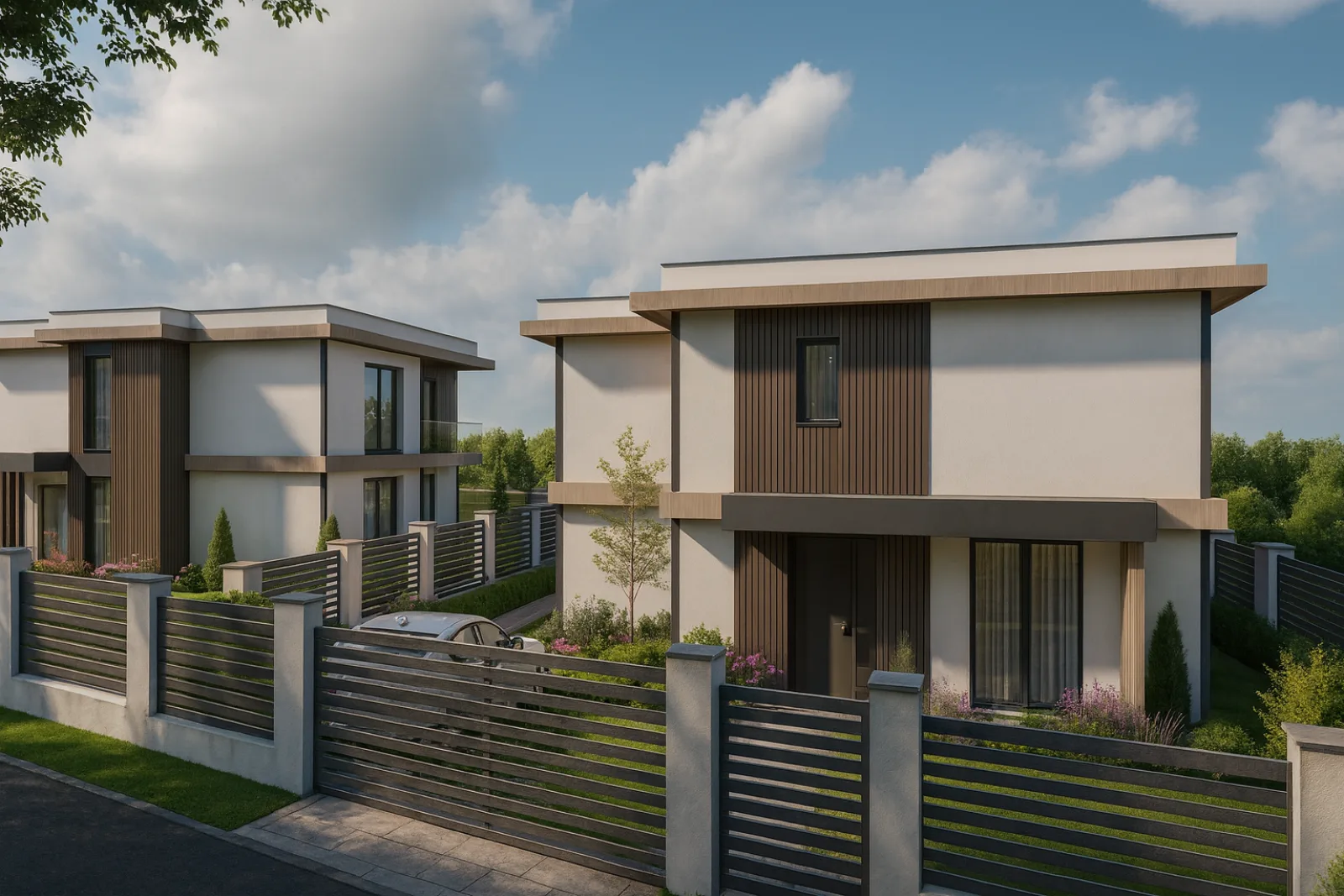
If the house is used mostly in summer or at weekends, the garden has to cope on its own for weeks at a time. The design then relies on automatic irrigation with a timer and a rain sensor, thick mulch, a small lawn, perennials instead of seasonal bedding and hard surfaces along the walkways. That way the garden looks good even when you are not in Varna.
Why landscaping is best planned together with the house
The best gardens begin on the drawing board. There are several reasons to plan the garden at the same time as the building:
- Levels. The height of the entrance and terraces sets the falls across the whole plot. If the house sits too low, drainage is hard to fix later.
- Drainage. Water has to be directed while the foundations and perimeter drains are being built.
- Utilities. Water, power and sewer connections, irrigation pipes and lighting cables go in during a single excavation instead of being cut through finished paving.
- Machinery and access. Once the fence, paving and lawn are in, an excavator or a truck can no longer get in.
We therefore recommend discussing the landscape during the architectural design stage and sequencing the works around the schedule of the house construction. In our projects the garden design is coordinated with the engineering parts (plumbing, electrical, HVAC and structures), because these decide where pipes, cables and retaining walls can run.
In addition, the planning parameters of a plot usually set a minimum percentage of planted area, so the garden is not only a matter of taste.
How a landscaping project works
We work in the same order as on our houses: clear steps, written agreements and progress reports along the way.
Consultation and site visit
A free consultation and a visit to the plot: your wishes, how you use the garden, constraints.
Survey and concept
Levels, utilities, zones and a first concept for the garden.
Design and quote
Paving and planting plans and a detailed quote with a written schedule and materials.
Execution
Our own vetted crews and regular progress reports.
Handover
Final inspection, snagging and a formal handover with warranty.
On site the sequence matters: first earthworks and grading, then drains, pipes and cables, then the bases for paving and retaining walls, and finally soil, planting and lawn. That way nothing newly built is damaged by the next trade.
When is the best time to plant?
Trees, shrubs and perennials are best planted in autumn (from late September to November) and early spring (March to April), when it is not hot and plants establish before the summer drought. Lawn is also usually sown in early autumn or spring. Planting in July and August is possible but needs far more frequent watering. Paving and walls depend less on the season, but concrete work is avoided in freezing weather.
What affects the cost and timeline
We do not publish "from-to" prices because two gardens are rarely comparable. The cost is driven by:
- the area of the plot and how much of it is laid out;
- the slope, the amount of earthworks, and the need for retaining walls and drainage;
- the share of hard surfaces: pavers, stone, terraces and walls cost more than lawn;
- the size of the plants: mature trees cost far more than young ones;
- the irrigation system (number of zones, water source) and the lighting;
- machinery access to the plot and the season of the works.
After a site visit we give a free, itemised quote with separate lines for paving, walls, planting, irrigation and lighting. That lets you choose what to build now and what to leave for a later phase.
Design usually takes from a few weeks, depending on the size of the garden and how quickly decisions are agreed. Construction can take from a few weeks for a small garden to several months for a large plot with retaining walls. Planting is seasonal, so the schedule is agreed with the planting season and with the programme of the house.
Common mistakes and a checklist before you start
These are the mistakes we see most often in gardens made without a plan:
- lawn everywhere and no irrigation, so it burns out in July;
- paving laid with no fall for run-off and no pipes or cables under it;
- plants chosen from a photo instead of for the wind, the sun and the soil;
- trees planted too close to the house or a fence, or over utility routes (distances to the boundary also have to be checked);
- too many plant species, which are hard to look after and look messy;
- landscaping left to the end, so the budget runs out before it starts.
What it helps to prepare before the site visit:
- proof of ownership and a sketch or survey of the plot;
- the house design, if there is one, or at least its position and levels;
- where the water and electricity connections are;
- how you will use the garden: children, pets, barbecue, parking, seating;
- how often you are in Varna and who will look after the garden when you are away;
- budget and priorities: what should be ready now and what can wait.
Where we work: Varna, Veliko Tarnovo and the surrounding regions
We shape gardens and yards in Varna and its districts (Vinitsa, Priboi, Galata, Asparuhovo, Zvezditsa, Konstantinovo) and in Aksakovo, Avren, Beloslav, Devnya, Kamenar, Byala and Shkorpilovtsi. Near the sea, wind and salt spray narrow the choice of plants, so we specify tolerant species, mulching and sheltered corners. Paths, paving and lighting are chosen with the same wind and moisture in mind. On sloping coastal plots we resolve terraces, retaining walls and drainage so that they do not load the slope, and on landslide-prone ground we work only after a geological survey.
In Veliko Tarnovo gardens often sit on hilly ground: in the city, Arbanasi, Samovodene, Sheremetya, Resen, Kilifarevo and Debelets, and around Gorna Oryahovitsa and Lyaskovets. Winters there are colder and more continental, so we choose frost-hardy plants and shape slopes with steps, terraced beds and retaining walls. In Arbanasi and the old town, fences, paving and materials are more restricted and need extra approval.
Both regions are part of the work of our own vetted crews. Contact us and we will come for a free site visit to your garden in Varna or Veliko Tarnovo, so the garden suits both the plot and the local climate.
Why Altea Build
Altea Build is a construction company with over 15 years of experience that started as a small family business. We work with our own vetted crews and check quality at every stage. For a garden this is an advantage: one team answers for both the house and its surroundings, and the landscape is coordinated with the design and installations instead of being improvised at the end.
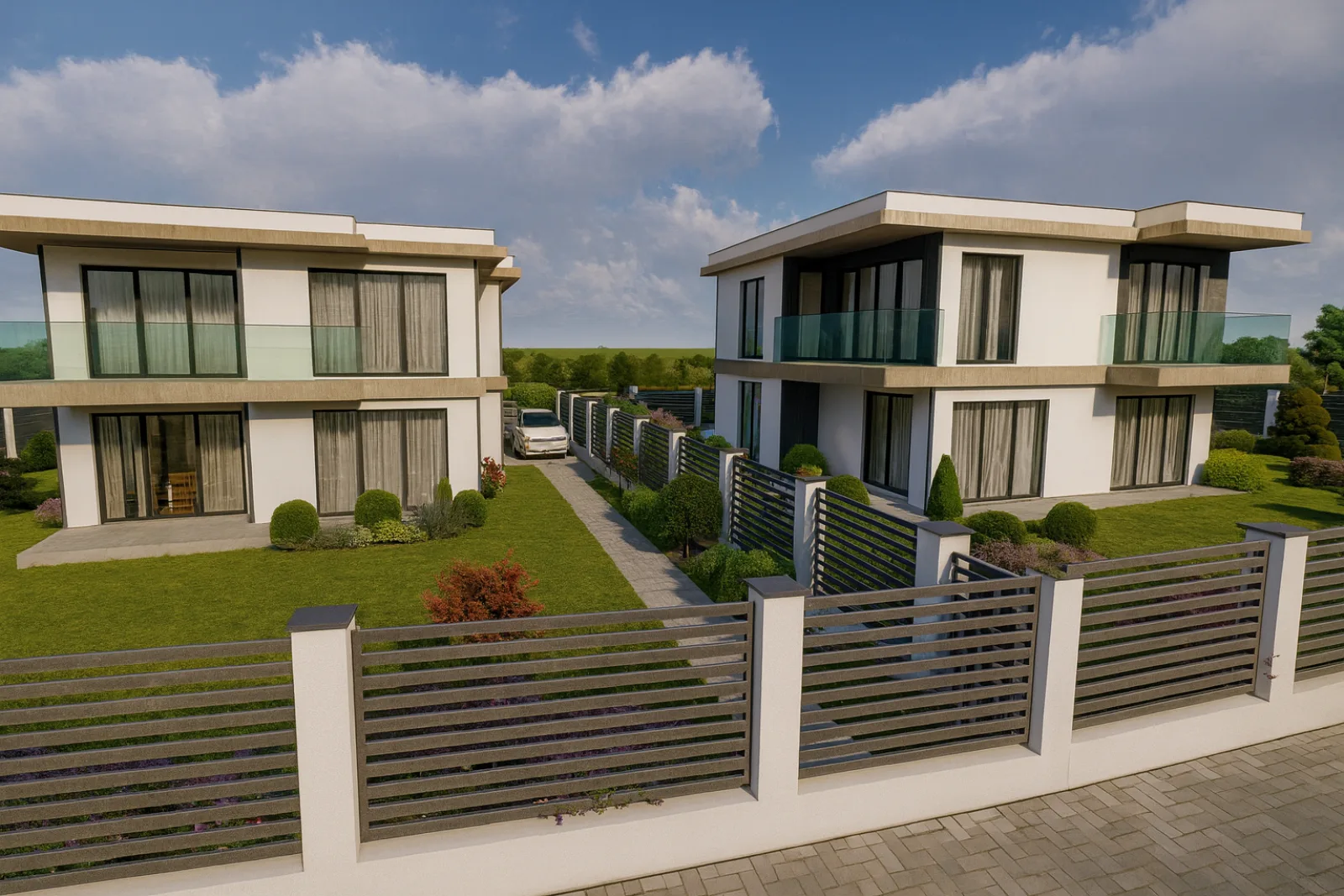
Our main region is Varna, our extended region is Veliko Tarnovo, and we work across Bulgaria. You can see how we think about the link between a building and its surroundings in our project of two new houses in Priboi, about 5 minutes by car from the beach. We finish with a formal handover and long-term warranties on all key elements.
Request a site visit
Tell us about your plot and what you want from it. Call 0887 37 77 13, 0894 38 33 85 or 0894 51 47 57, write to office@alteabuild.com (Monday to Friday, 09:00 to 18:00) or send an enquiry through the contact page. The consultation and site visit are free.