Apartment renovation in Varna: what it involves and who it is for
Apartment renovation in Varna usually starts with one question: will a fresh coat of paint and new flooring do, or does the home need a full renovation? If the pipes date from the day the block was built, the bathroom leaks and the layout no longer suits the way you live, cosmetic work only postpones the problem. Altea Build handles both ends of the range, from refreshing individual rooms to a full turnkey renovation of an apartment or an entire house.
Our clients are people who have bought an older flat and want it brought up to standard, owners of tired family apartments in Briz, Izgrev, Vladislavovo, Asparuhovo or Galata, and owners of houses in Vinitsa, Kaysieva Gradina and Priboi. Many are foreign owners who are not in Bulgaria for most of the year. None of them wants to coordinate a plumber, an electrician, a plasterer and a tiler separately; they want one renovation company in Varna responsible for the whole result.
It helps to separate two terms. Repair restores a home to a good condition: new floors, plaster, paint, a new bathroom. Renovation goes further. It replaces the services, improves insulation and energy efficiency and often changes the layout, so that the property works better and not just looks newer.
What a renovation includes
Full renovation, turnkey
A full renovation covers every stage: stripping out old floors, tiles and partition walls, checking the substrate, new services, plaster and screeds, flooring, bathroom and kitchen areas, doors, paint and final cleaning. With a full turnkey renovation you receive a home ready for furniture. The trades involved are described on our page about finishing works in Varna.
Replacing old plumbing and electrics
In many flats built between the 1970s and the 1990s the pipes are galvanised, the consumer unit and cables were never meant for today's number of appliances, and the bathroom has no proper waterproofing. A full renovation is the best moment to replace all of it, because the walls and floors are open anyway. You can read more about what we install on our plumbing, electrical and HVAC page.
Layout changes
Opening the kitchen to the living room, enlarging a bathroom or adding a wardrobe room are common reasons to renovate. Every such change begins with the question of which walls are load-bearing, covered below.
Energy-efficiency upgrade and insulation
An energy-efficiency upgrade can include better windows, removing thermal bridges, insulating external walls, roofs and floors above unheated spaces, and efficient heating and air conditioning. The aim is lower running costs, a steadier indoor temperature and, in a seaside city like Varna, less condensation on walls.
Building retrofit: facade insulation, roof and waterproofing
Retrofitting a building means working on its shared parts: facade thermal insulation, renewing render and plinth, the roof, waterproofing of terraces, flat roofs and basement walls, and replacing downpipes. A facade does not belong to a single apartment, so this work is decided by the owners of the building together, and a single flat cannot insulate its outside wall on its own. We prepare a detailed quote for the owners' association to discuss.
Refurbishing an old house in Bulgaria
Refurbishing an old house in Bulgaria adds topics that a block does not have: the roof and gutters, external render and insulation, timber or old brick structure, drainage around the plot and sometimes an extension.
Panel, EPK or brick: how the building type changes the job
The type of building decides what can be done and how. A specific apartment is always assessed on site.
Panel blocks
Panel buildings are made of prefabricated reinforced-concrete elements, and the structure works as a whole. A renovation is usually internal and generally does not involve moving walls. Typical issues are the joints between panels (cold and damp if poorly insulated) and old services. Cutting openings in panels is not a renovation task, because it affects the structure.
EPK buildings
EPK buildings, found in many Bulgarian cities including Varna, have a reinforced-concrete structure with load-bearing walls and slabs cast in place. They are strong but hard to reconfigure: internal walls are often load-bearing or part of the structure and cannot be drilled or knocked through on a hunch.
Brick buildings and old houses
In newer brick buildings with a reinforced-concrete frame some walls are only partitions, but not all of them. In old houses and buildings with load-bearing brick walls almost anything may be structural. Old masonry needs suitable materials: breathable plaster and paint, properly solved damp protection at the base, and careful handling of timber floors. Walls need to breathe: dense, impermeable coatings often lead to damp and mould.
Before you touch a wall: a structural engineer's assessment
The rule is simple: before a wall is removed or opened, it must be established whether it is load-bearing. A licensed structural engineer decides this from the building's documents and a site inspection. If the change affects load-bearing elements or shared parts of the building, a structural opinion, a design and the approvals required under the Spatial Planning Act (ZUT) are needed, and for shared parts the consent of the owners' association. Not every renovation needs a building permit, but which ones do depends on the specific case. At the site visit we clarify what you need and refer you to a designer through our architectural design service in Varna.
Renovating in an occupied building: noise, neighbours and the owners' association
Most renovations in Varna take place in buildings where other people live. Organisation is therefore almost as important as craftsmanship. Before work starts, notify the building manager (the elected representative of the owners' association) and the neighbours above, below and alongside: when work starts, how long the noisiest phases are expected to last, and whom to call.
Hours for noisy work such as demolition, drilling and tile cutting should respect the quiet hours in the building's house rules and local municipal requirements, so we agree them in advance. Shared areas are protected: the lift and stairwell are covered, rubble is not left in the entrance, and its removal is arranged on time.
Can you live at home during the works?
For work on a single room or bathroom it is often possible, if you have a second bathroom or at least a working toilet and a kitchenette. During a full renovation including new services, dust, noise and water or power cut off for periods make living in the flat very hard, so we recommend moving out temporarily. If that is not possible, the work can be split into phases, with priority for the rooms the home cannot function without. The order and length of the phases are written into the schedule in advance.
How a renovation runs: the order of works step by step
Free consultation and site visit
We inspect the property, discuss your goals and budget, and review the state of the services and structure.
Detailed quote and schedule
You receive a transparent, itemised quote with a written schedule and a list of materials.
Strip-out and inspection
Once the space is cleared, we see the real state of walls, floors and services and agree any change of scope.
Services and rough works
New plumbing, electrics and heating, partition walls, waterproofing, screeds and plaster.
Finishing by our own crews
Flooring, tiling, doors, paint and fitting, with regular progress reports and quality control at every stage.
Final inspection and handover
Inspection of the whole home, snagging and formal handover with a warranty.
The right order of works
The order is not arbitrary, and mistakes in it are paid for twice. First come stripping out and checking the substrate, then new partition walls and rough services (pipes, cables, boxes), then waterproofing of wet rooms, screeds, skim coats and plaster. Windows go in before the finishing plaster around them. Tiling and flooring follow once walls and floors are dry and level, and painting and fitting appliances, switches and lighting come last.
The timeline depends on the size and condition of the property. A small apartment needing only finishing work may be ready in a few weeks, a full renovation with new services and layout changes usually takes longer, and a house can take months. We put realistic dates in the quote after the site visit.
What drives the cost and the timeline
Anyone who quotes a price for an apartment renovation without seeing it is guessing, not calculating. The final sum and the time it takes depend mostly on:
- area and condition of the property, and how much is stripped back to bare structure;
- scope: finishing work only, or also new services, windows, insulation and layout changes;
- grade of materials: flooring, tiles, sanitaryware, doors, built-in joinery;
- building type: panel, EPK or brick, and access (floor, lift, parking, space for a skip);
- hidden problems that appear after strip-out;
We do not publish per-square-metre price ranges because they mislead. Instead we offer a free site visit and a detailed itemised quote with a schedule and materials that you can compare with others.
Checklist before you start
These points save the most money and stress. Go through them before signing a contract with anyone:
- Decide what you want to achieve (refresh, full turnkey renovation, reconfiguration) and set a rough budget with a contingency.
- Gather the documents you have for the property and building (plans, sketches, earlier alterations); they help when assessing the structure.
- Find out where the load-bearing walls are and whether the planned layout change needs an engineer and approvals.
- Judge the condition of the pipes, the electrical board and the bathroom waterproofing, not just how things look.
- Tell the building manager and the neighbours, and learn the quiet hours. Choose tiles, sanitaryware and doors early.
- Ask for a written, itemised quote with a schedule, materials and payment terms, not a lump sum.
- Agree how changes and unforeseen work are approved, and who signs off materials.
- Agree a final inspection, a handover record and a warranty for the completed work.
Why Altea Build, and how remote renovation works
Altea Build is a construction company with more than 15 years of experience that started as a small family business. We work with our own vetted crews rather than subcontractors assembled for the occasion, with quality control at every stage. We work mainly in Varna, and in Veliko Tarnovo in our extended region. The process is transparent: a free consultation and assessment, a detailed quote with a written schedule and materials, execution with regular progress reports, and a formal handover with long-term warranties on all key elements.
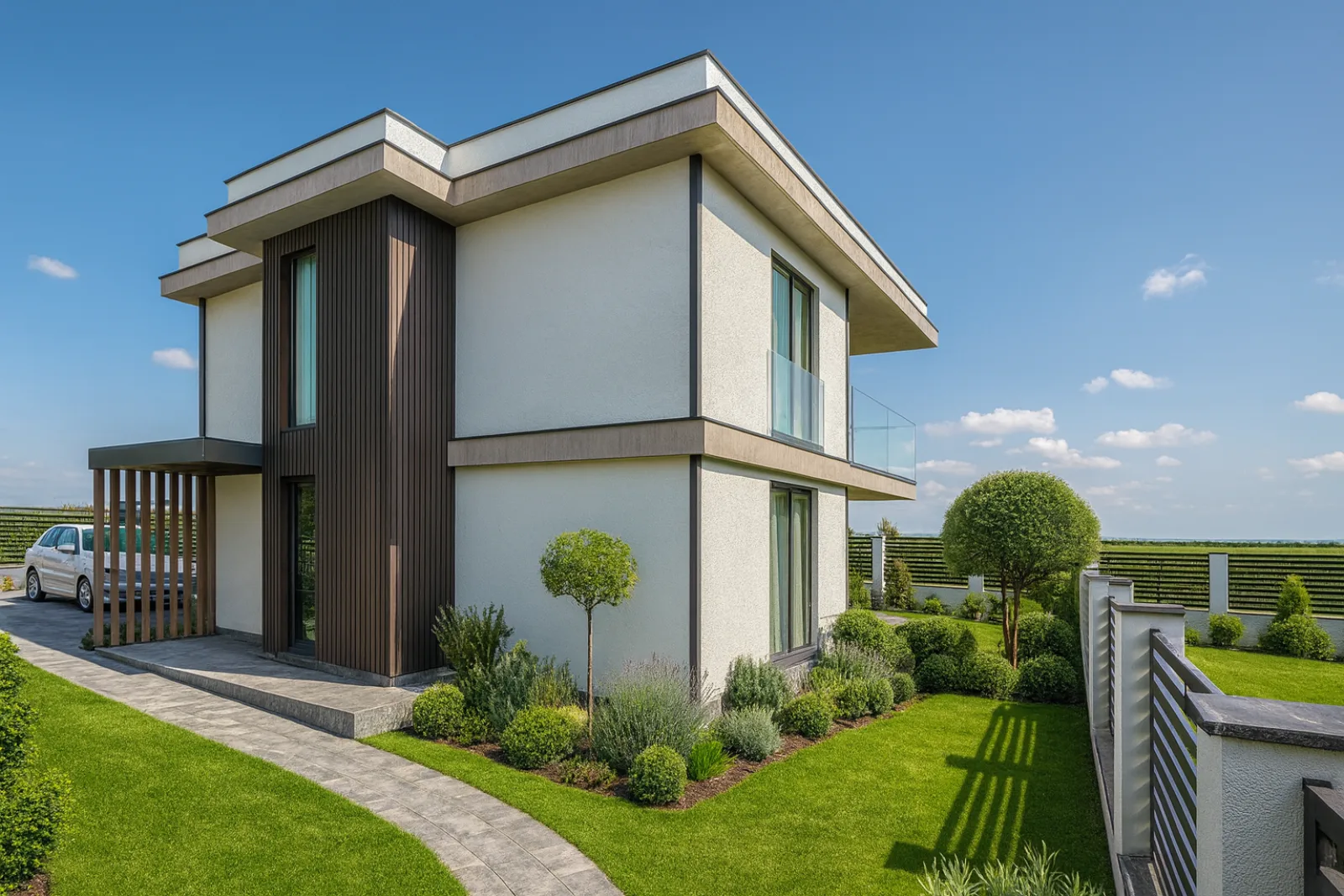
Renovating from abroad: one contractor instead of separate trades
Many owners of older apartments and houses in Varna and along the coast live elsewhere, or use the property as a holiday home. For them the biggest risk is not the work itself but the lack of someone reliable on site. With one contractor instead of separate trades you have one point of contact and one schedule. You receive regular progress reports, so you can follow the renovation of your holiday home without being there, and decisions on materials and any change of scope are agreed with you and put in writing.
You can see how our crews work and how we control quality in our current project, two new houses in Priboi, Varna. If you have a property waiting for renovation, contact us for a free site visit and quote: call 0887 37 77 13 or write to office@alteabuild.com, Monday to Friday, 09:00 to 18:00. We will tell you honestly what is needed and what can wait.